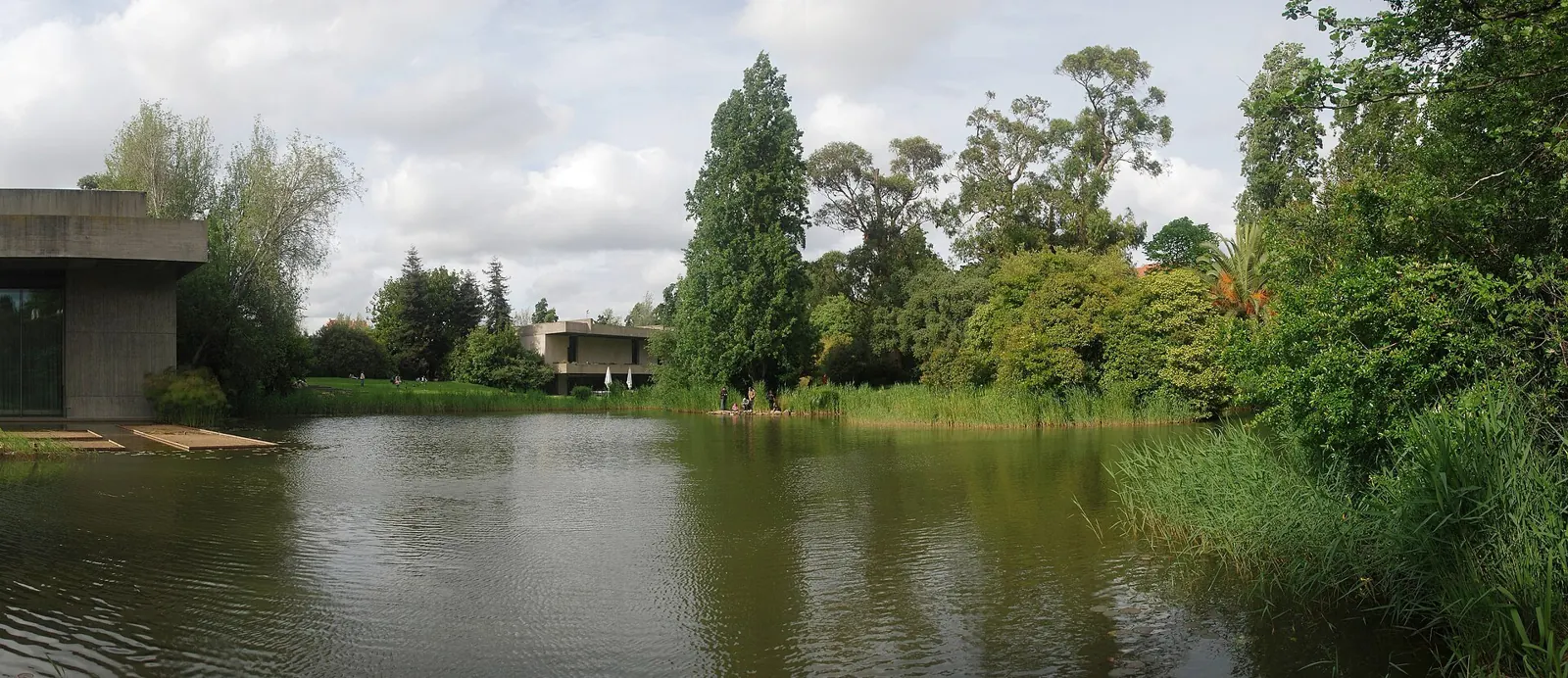
An oil magnate's collection, from Egypt to Lalique, in a 1969 modernist building in a garden. The Modern Collection (CAM) reopened in 2024 with a new building by Kengo Kuma.
Look for: René Lalique's dragonfly woman.
Closed Tuesdays
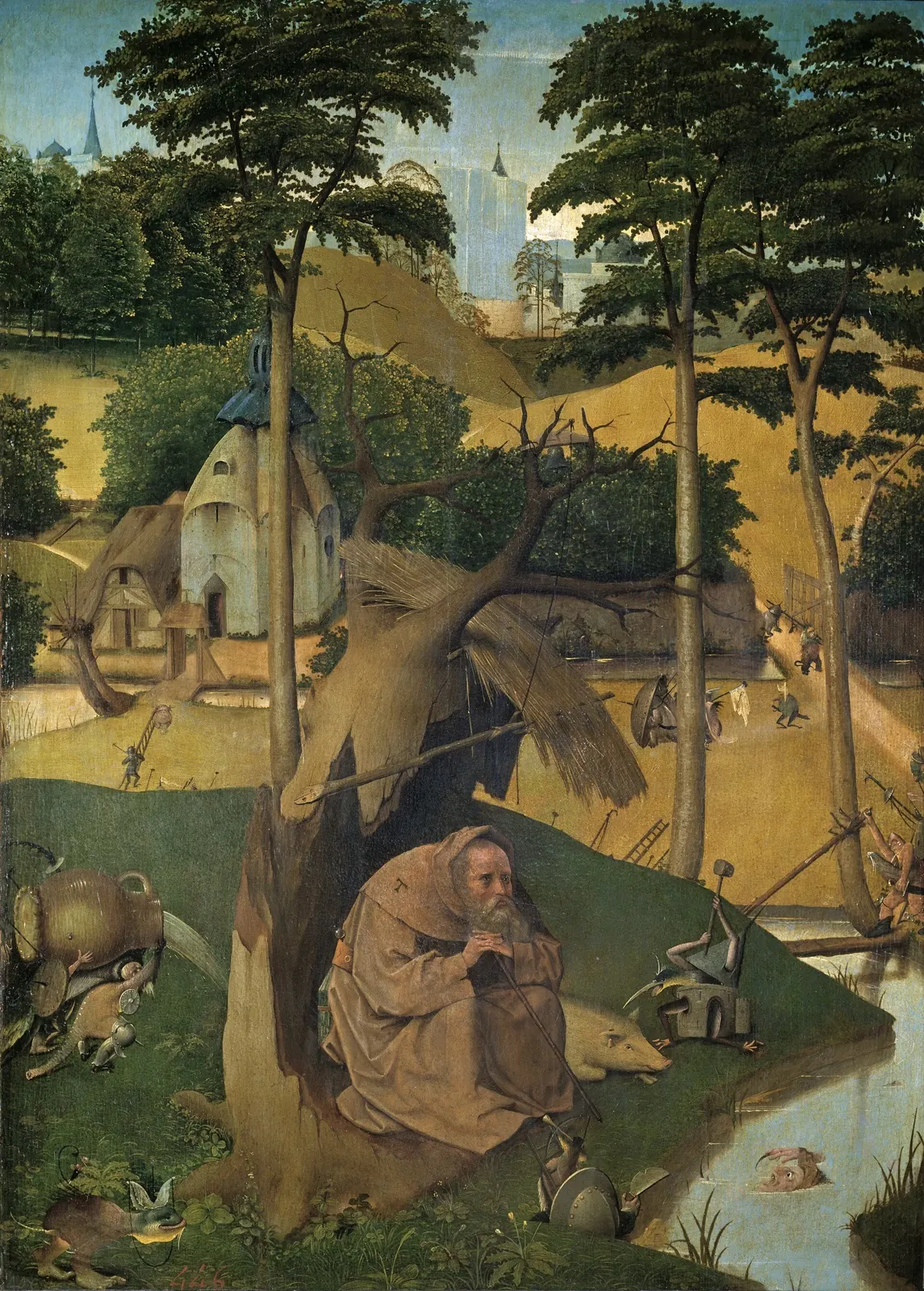
Hieronymus Bosch, The Temptation of Saint Anthony, c. 1501. Museu Nacional de Arte Antiga, Lisbon · Public domain
Museum · Lapa
Museu Nacional de Arte Antiga
Portugal's national collection of old masters, in a palace above the docks, with Bosch's Temptation of Saint Anthony and Nuno Gonçalves's Saint Vincent panels.
Look for: The Namban screens: the Portuguese arriving in Japan, seen by Japanese painters.
Closed Mondays
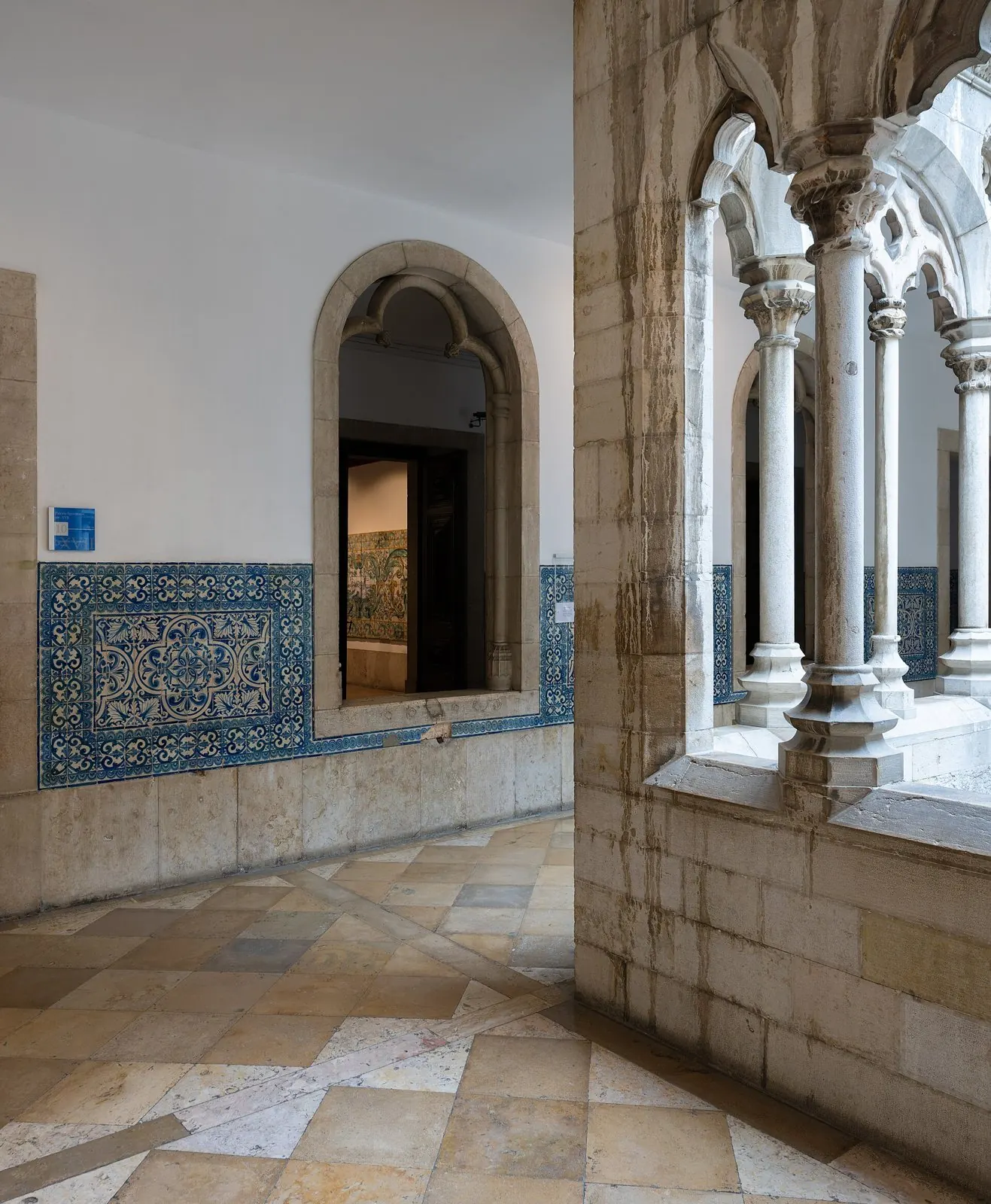
Museu Nacional do Azulejo, Lisbon · CC BY-SA 4.0
Museum · Xabregas
Museu Nacional do Azulejo
Five centuries of Portuguese tiles in the convent of Madre de Deus, with a gilded chapel.
Look for: The 23-metre panorama of Lisbon before the 1755 earthquake.
Closed Mondays
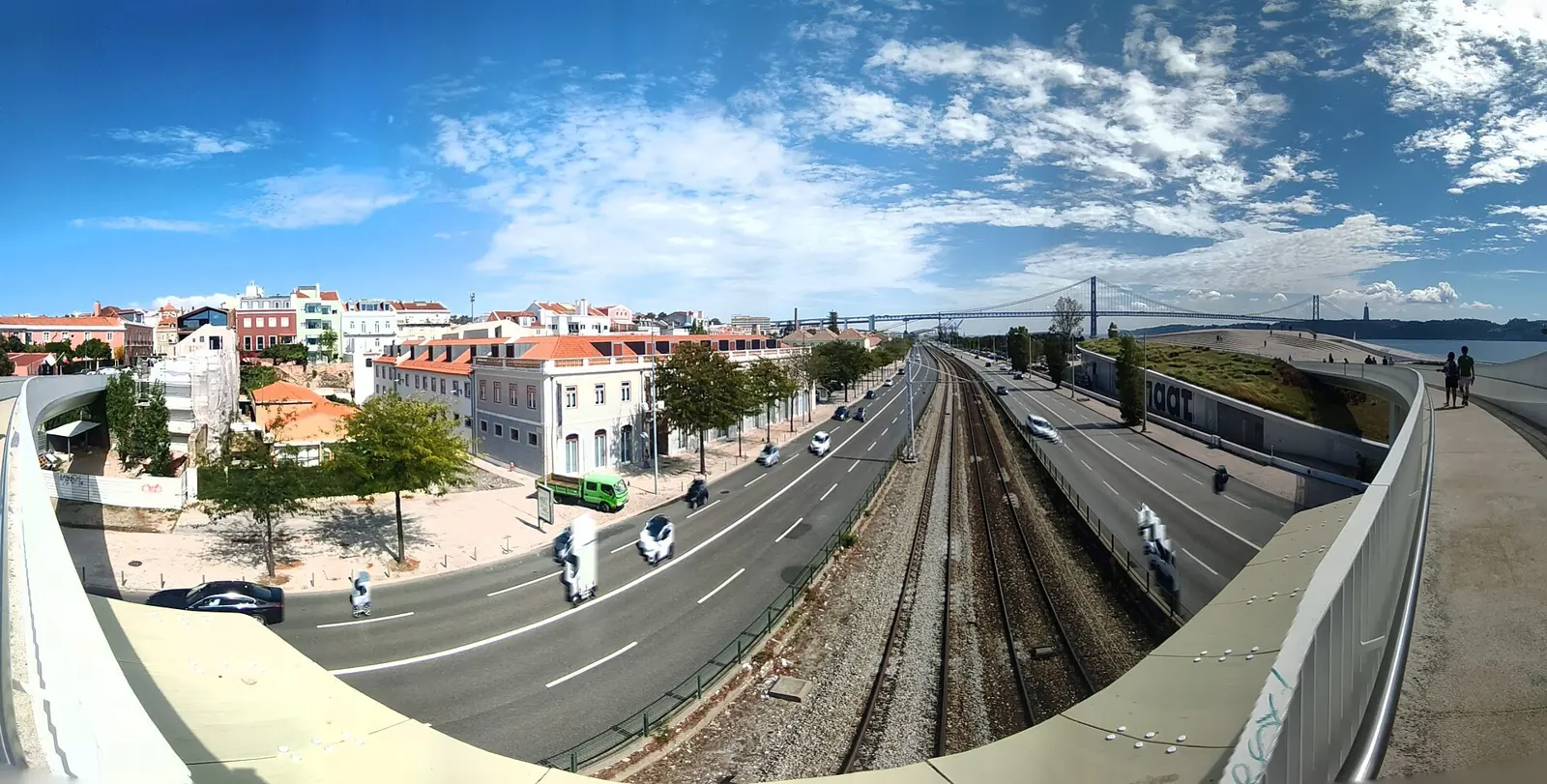
Leeturtle · CC BY-SA 4.0
Museum · Belém
MAAT
Amanda Levete's wave-shaped museum of art, architecture and technology beside an old power station, with a walkable roof.
Look for: The roof at sunset, facing the 25 de Abril bridge.
Closed Tuesdays
Off the list
Off-Piste in Lisbon
Rooms, ruins and curiosities: the city's other museum.
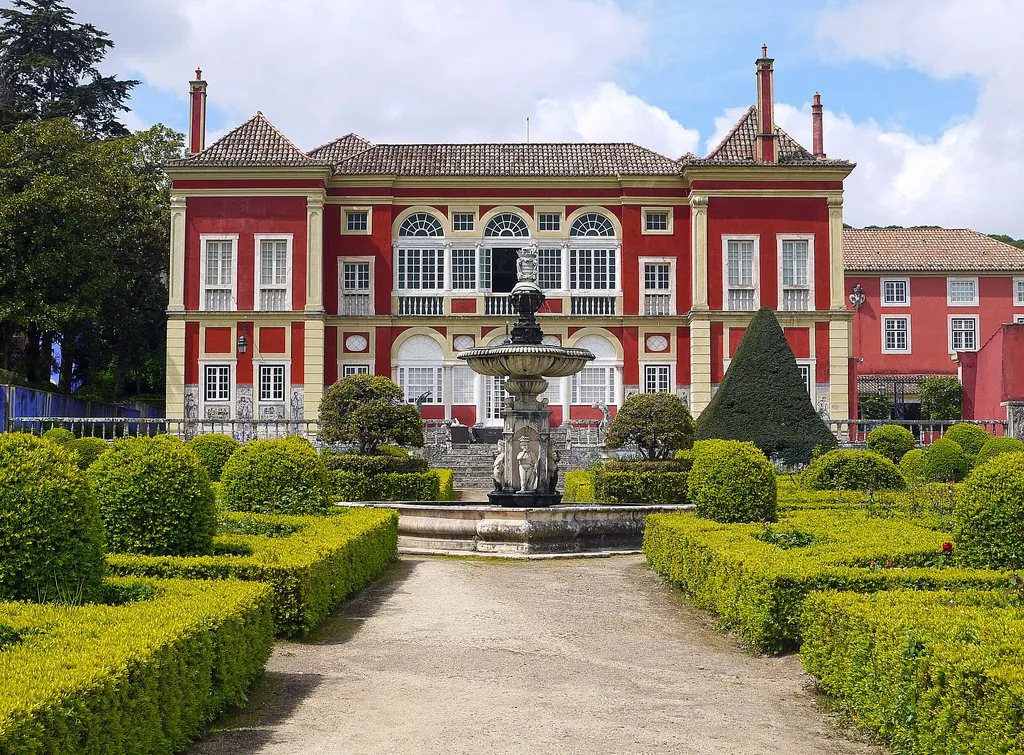
Palácio Fronteira, Lisbon · CC BY 2.0
Garden · Benfica
Palácio Fronteira
A 17th-century palace whose gardens are lined with blue-and-white azulejos: monkeys playing music, knights, the months.
The Gallery of Kings over the water.
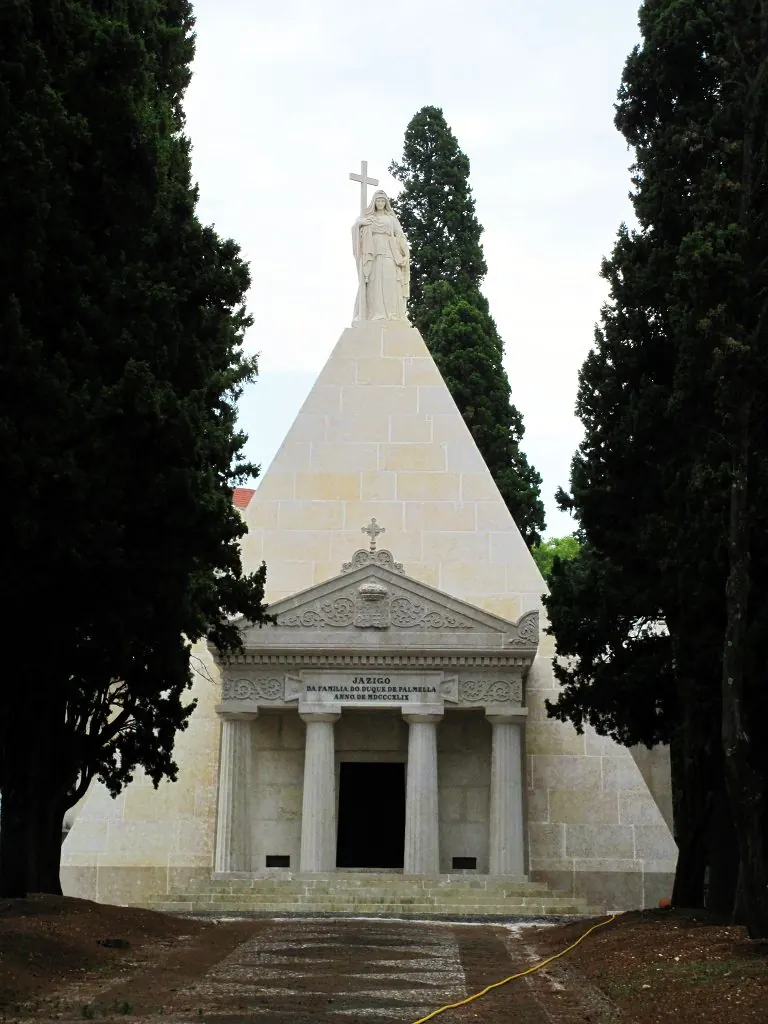
Prazeres Cemetery, Lisbon · CC BY-SA 2.0
Cemetery · Campo de Ourique
Prazeres Cemetery
A city of family mausoleums with lace curtains in their windows, at the end of the 28 tram line.
Look through the windows of the chapels.
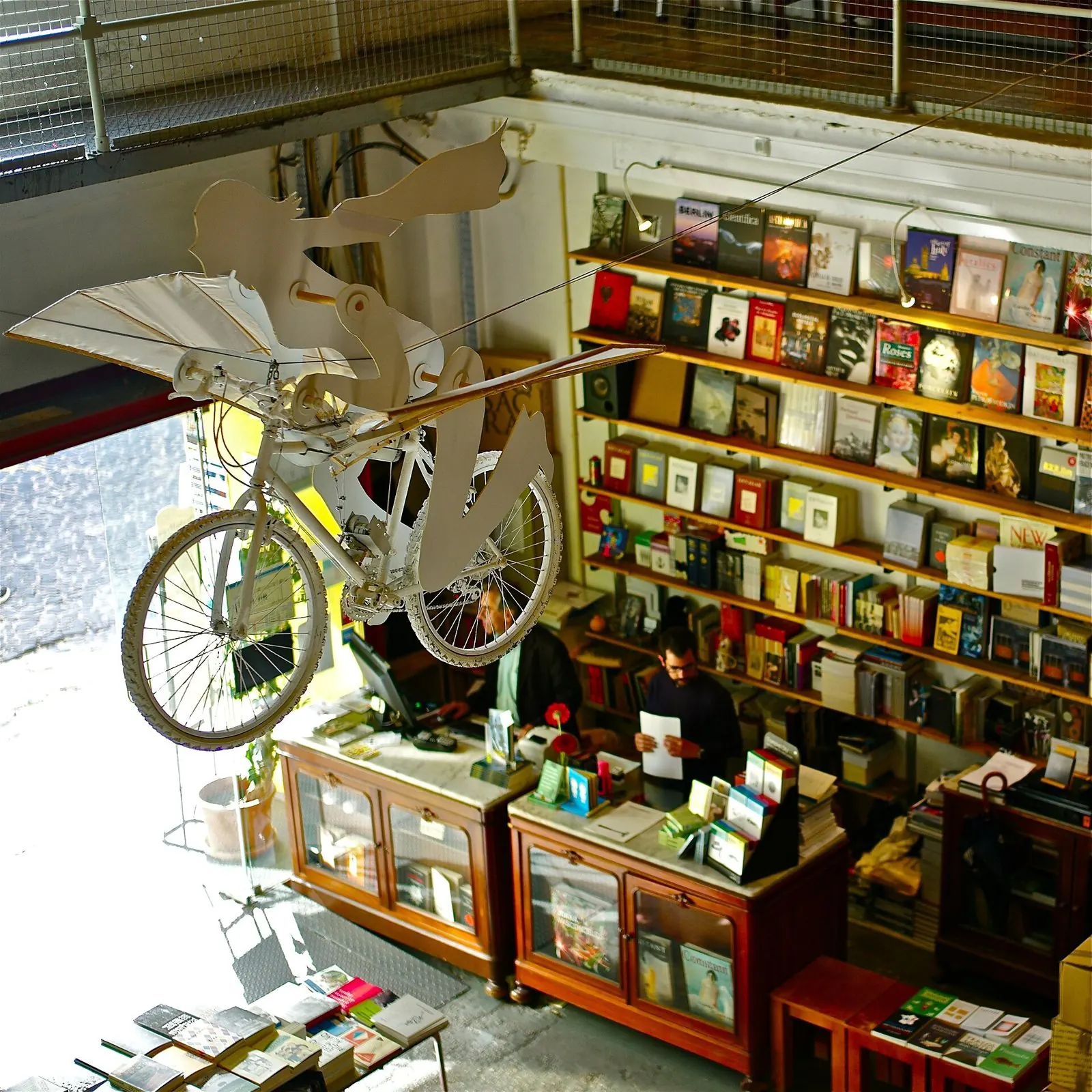
Ler Devagar, Lisbon · CC BY 2.0
Bookshop · LX Factory
Ler Devagar
A bookshop in an old printing works, with a bicycle flying overhead.
Look up.
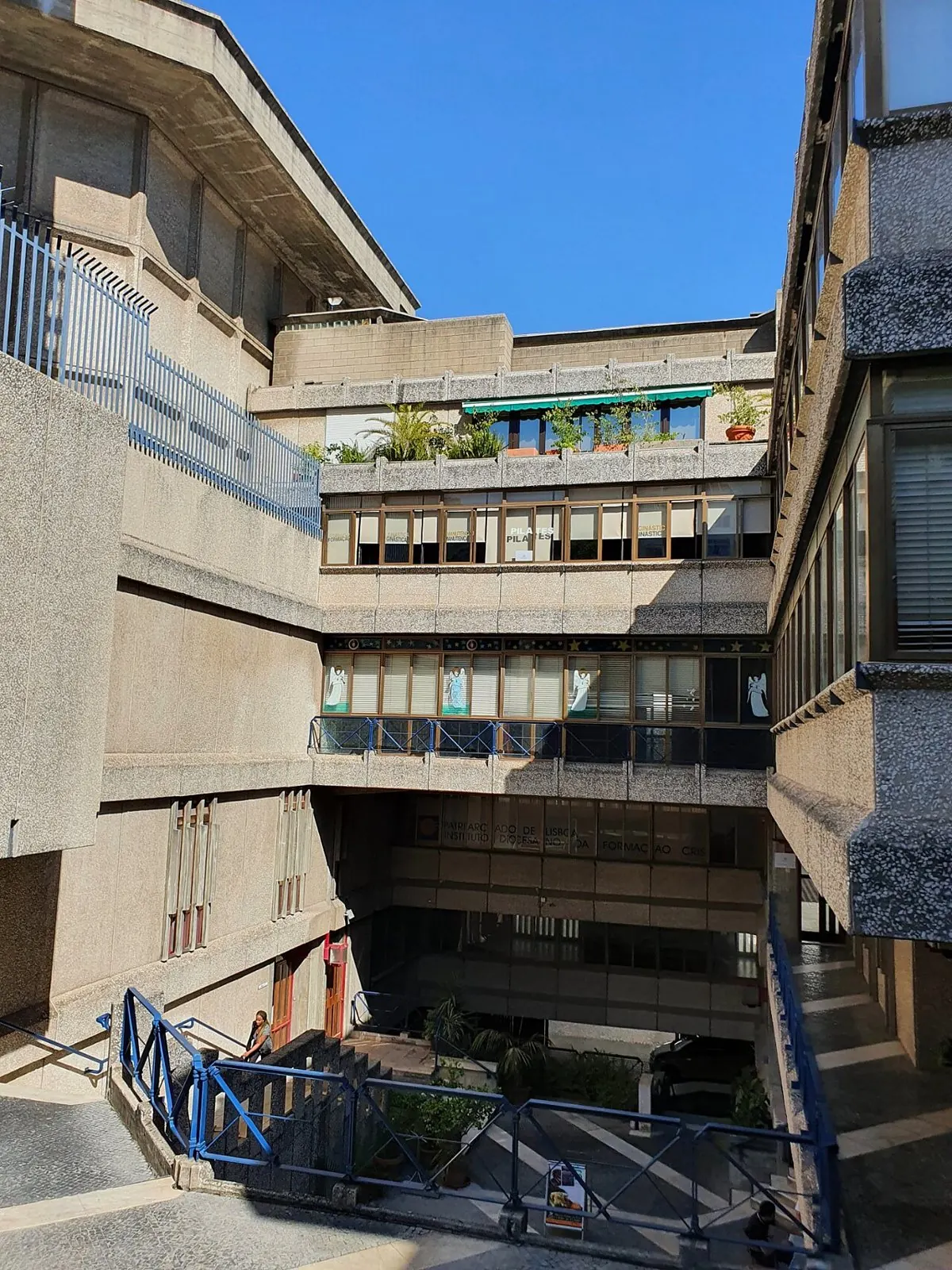
Igreja do Sagrado Coração de Jesus, Lisbon · CC BY-SA 4.0
Church · Rato
Igreja do Sagrado Coração de Jesus
A Brutalist church of 1970 by Nuno Teotónio Pereira and Nuno Portas, with concrete stairs and walkways that turn it into a covered street.
Walk through it from one street to the other.
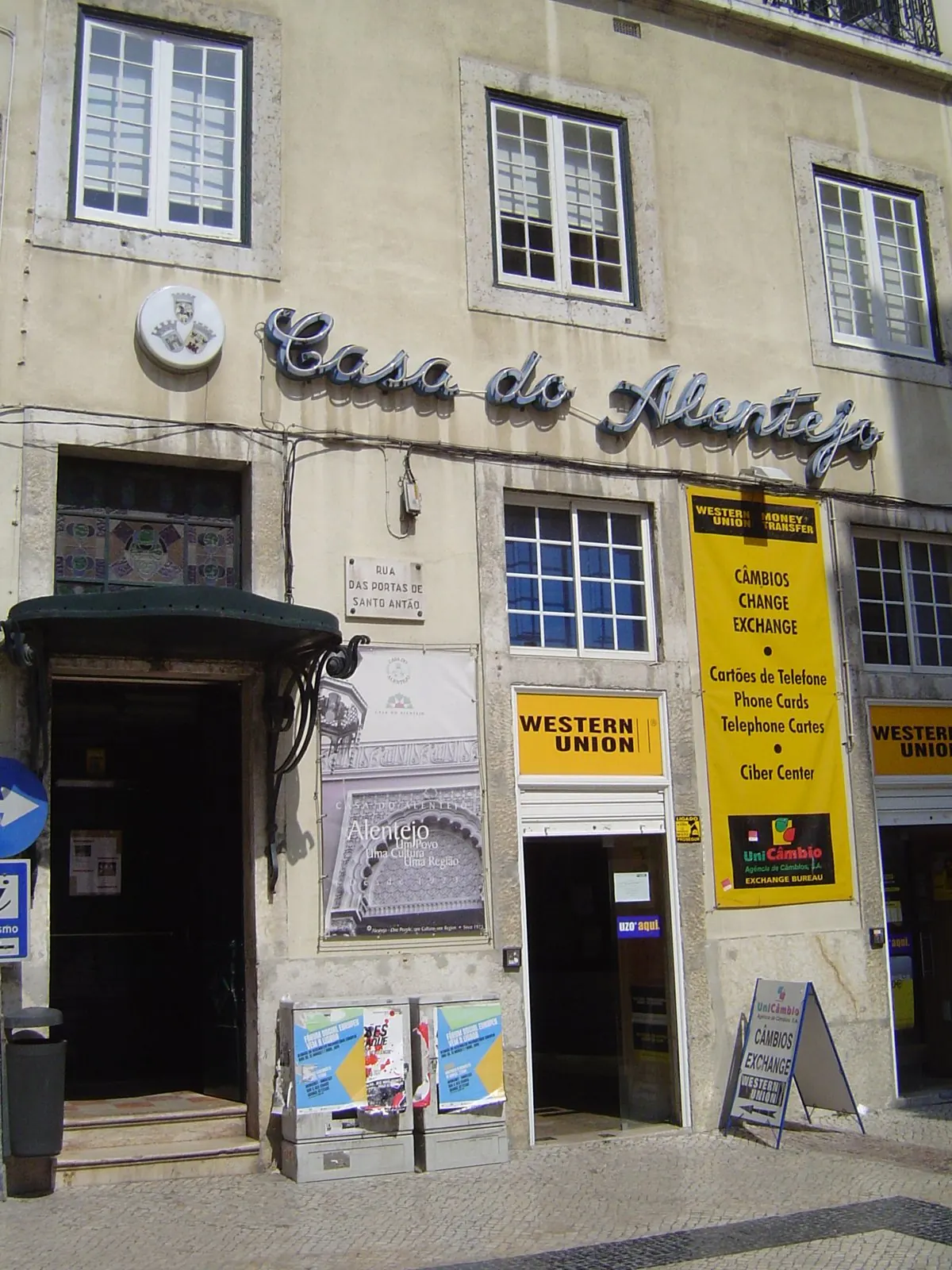
Casa do Alentejo, Lisbon · CC BY-SA 2.0
Interior · Rua das Portas de Santo Antão
Casa do Alentejo
Behind an ordinary door is a neo-Moorish courtyard and staircase from a 19th-century palace. Upstairs are tiled dining rooms and a ballroom, now the Alentejo regional club and its restaurant.
Climb the stairs to the tiled dining room.
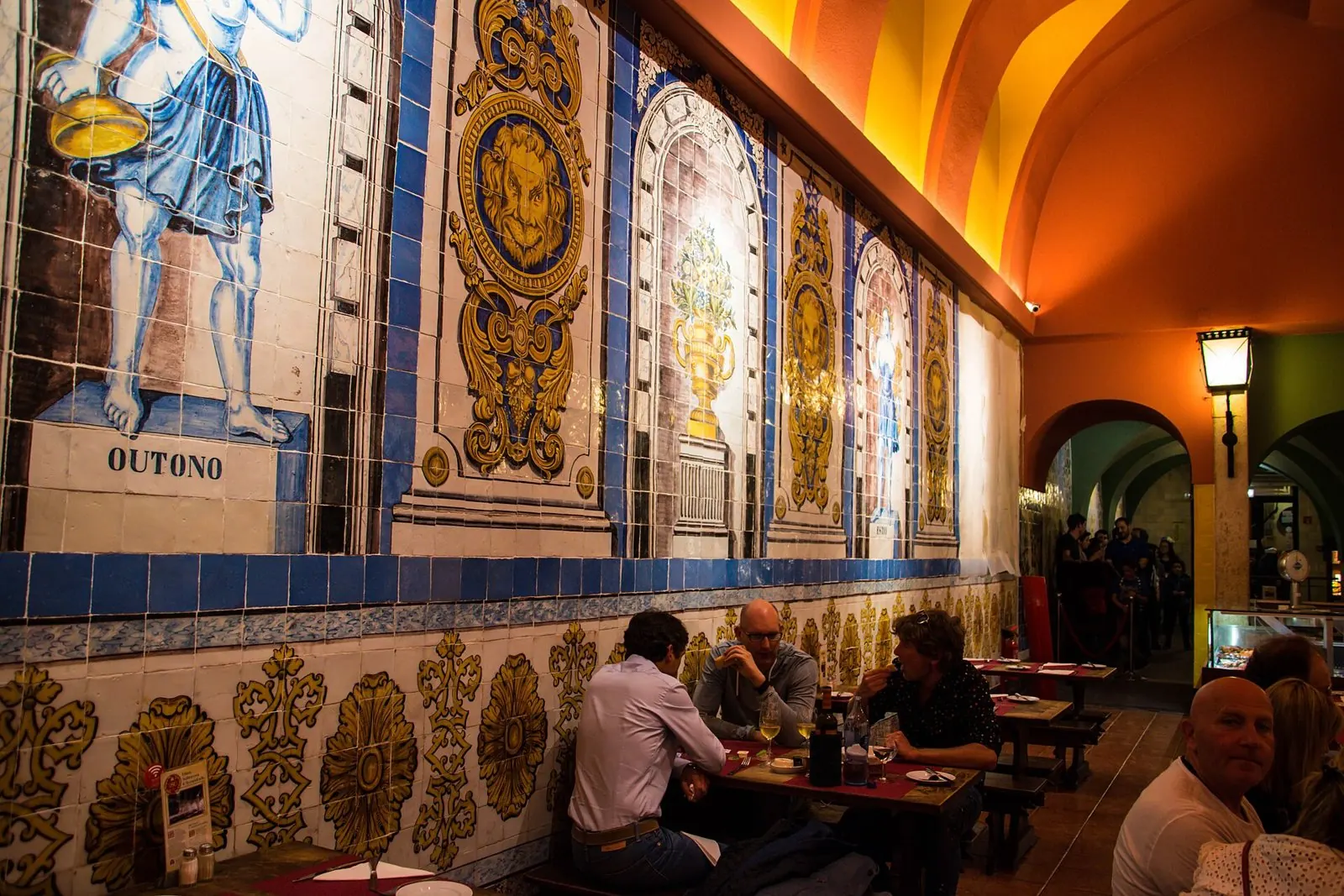
Cervejaria Trindade, Lisbon · CC BY-SA 2.0
Restaurant · Chiado
Cervejaria Trindade
A beer hall since 1836 in the refectory of a former convent, its walls covered with 19th-century azulejos of the seasons and the elements.
The tile panels in the back room.
Nearby
Sintra
Palaces in the forest, 40 minutes by train.
If you have one day
Museu Nacional de Arte Antiga at opening → tram 15 to Belém → MAAT → lunch → back to the Gulbenkian for the afternoon.