A city that keeps rebuilding its museums and galleries after every catastrophe, and one of the most serious art scenes in the region. Check travel advice before you go.
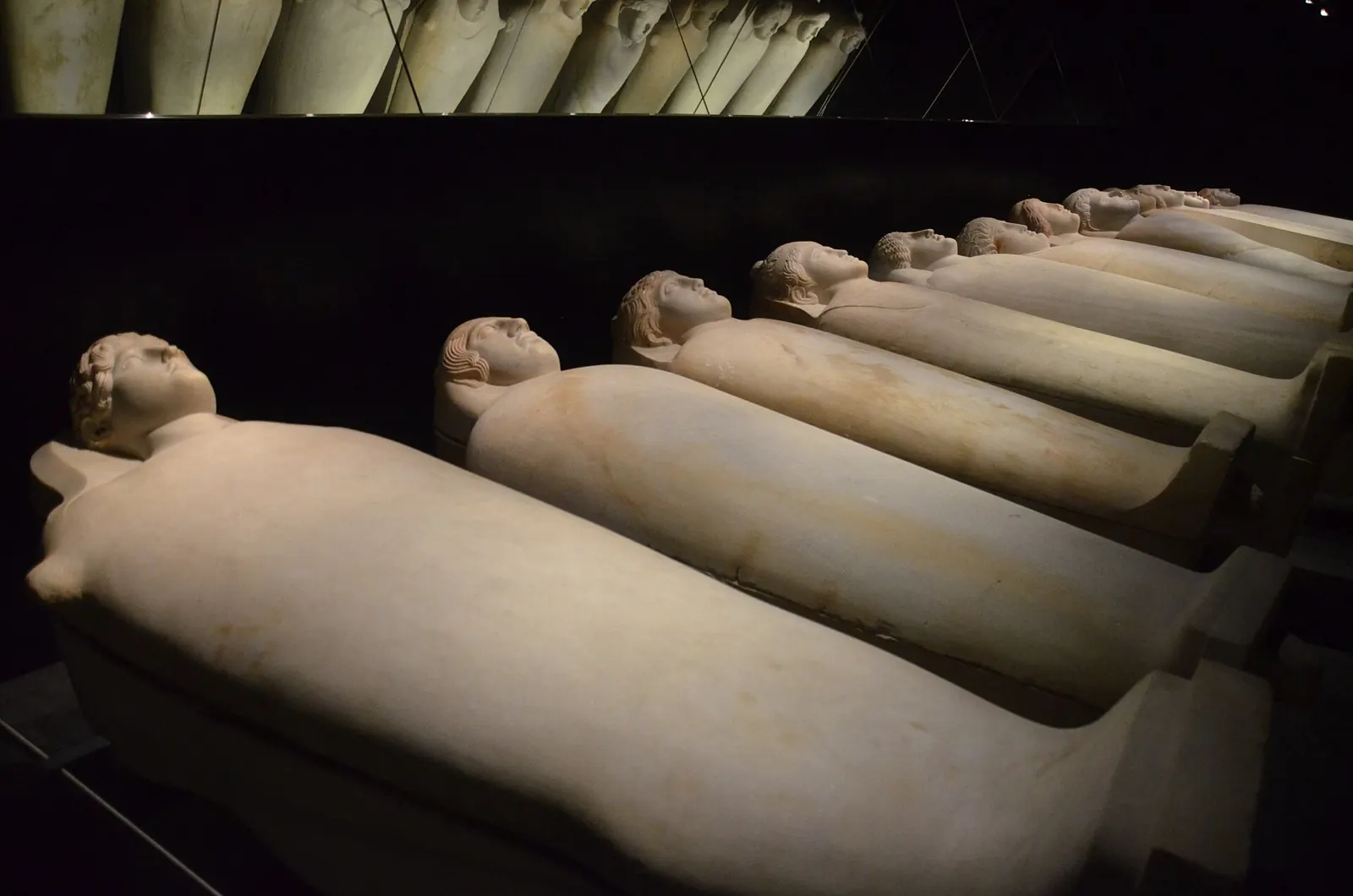
Phoenician anthropoid sarcophagi. National Museum of Beirut · CC BY-SA 2.0
Best monthsOctober–November and April–June
Art calendarBeirut Art Fair (autumn, when it takes place) · Beirut Design Week
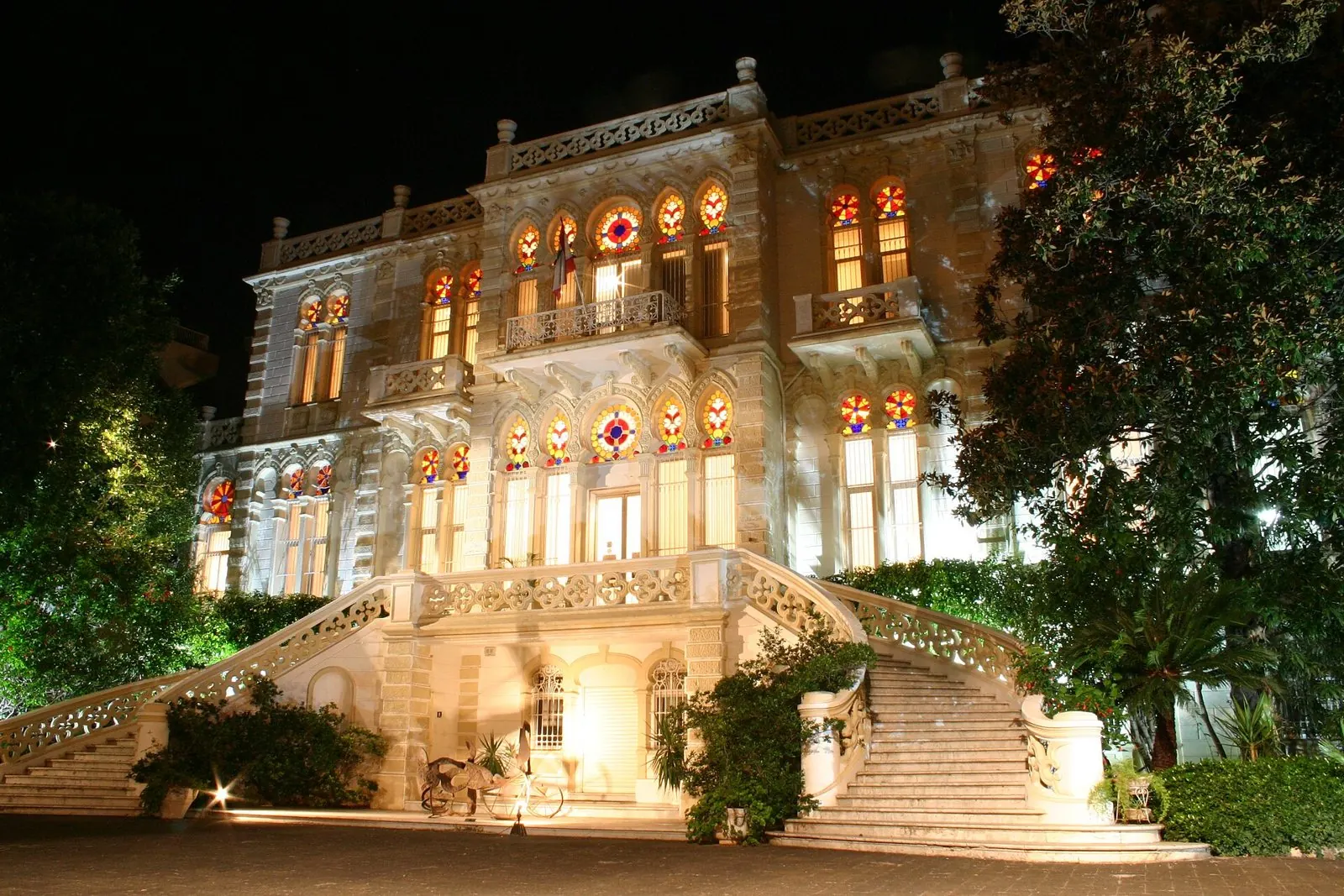
A white Ottoman-Venetian villa of 1912 left to the city by Nicolas Sursock. Badly damaged in the 2020 port explosion, it reopened in 2023, with modern Lebanese art and serious contemporary shows.
Look for: The Salon Arabe, with its carved wooden ceiling.
Free · closed Tuesdays
Mim Museum, Beirut · CC0
Unusual museum · Université Saint-Joseph
Mim Museum
A private collection of more than 2,000 minerals from around the world, presented like jewellery in the dark.
Look for: The fluorescent room.
Check opening days
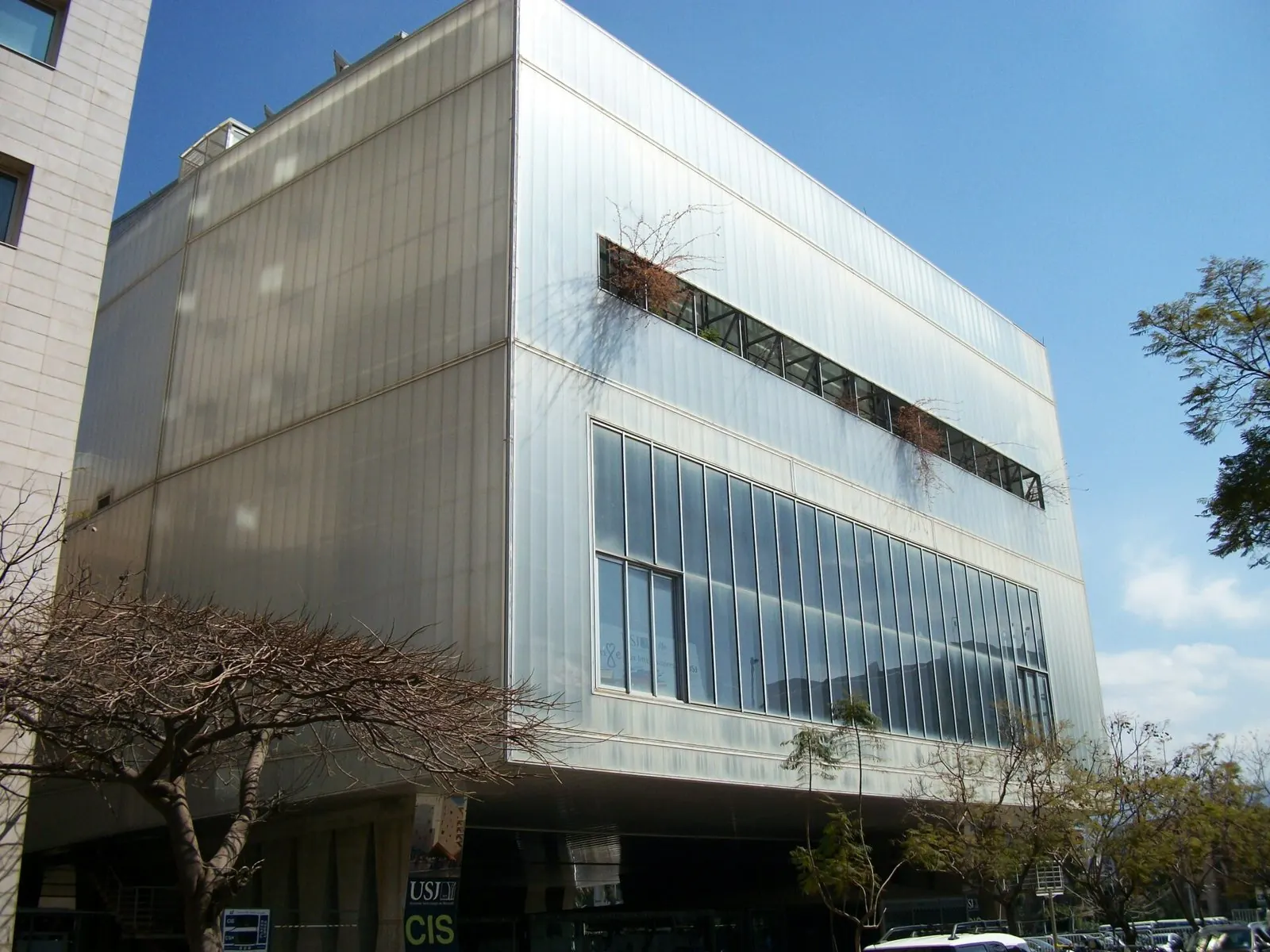
Museum (in the making) · Museum Street, by the National Museum
BeMA, Beirut Museum of Art
Lebanon's future museum of modern and contemporary art, built on Université Saint-Joseph land opposite the National Museum, to show for the first time the national collection kept for decades in ministries and the presidential palace. The building is due to open in 2029; until then BeMA shows the collection in pop-up exhibitions around the country.
Look for: Whatever pop-up show is on: it is the only way to see the state collection.
Check bema.museum for current shows
Sfeir-Semler Gallery, Karantina, Beirut · CC0
Gallery · Karantina
Sfeir-Semler Gallery
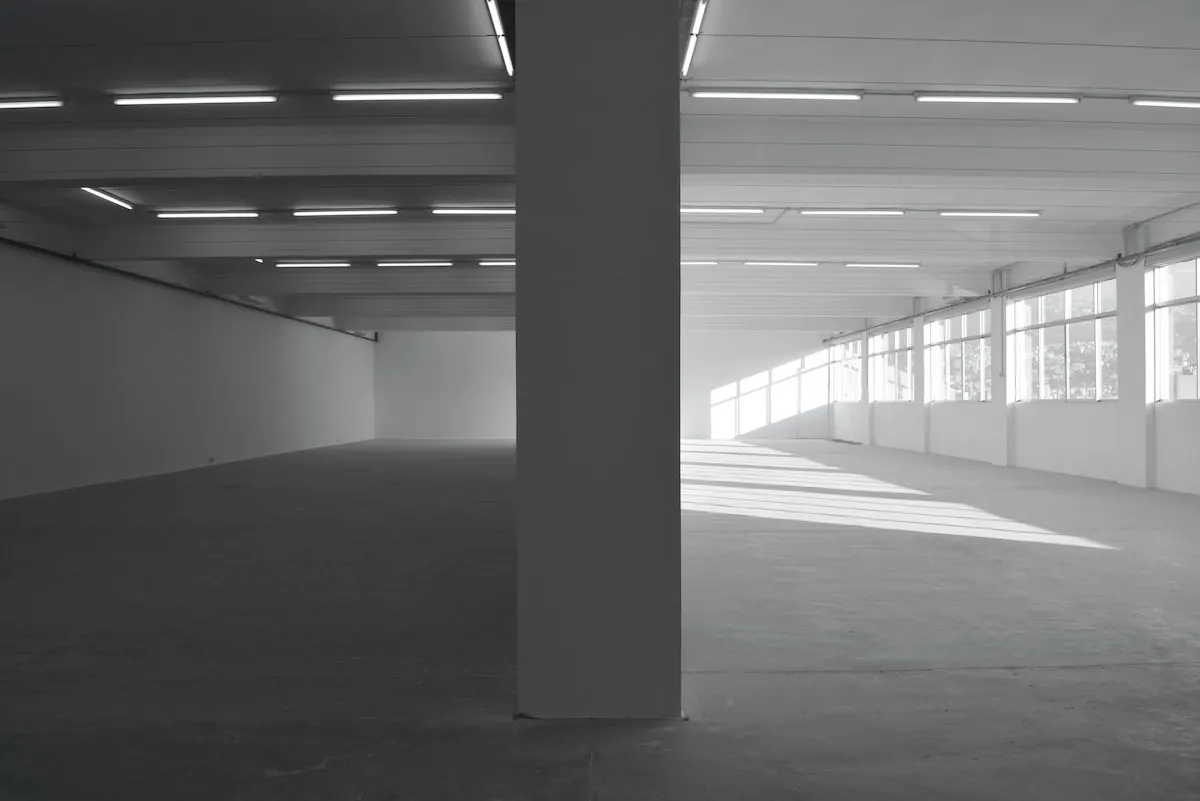
Andrée Sfeir-Semler opened her Beirut space in 2005, after twenty years in Germany, on the fourth floor of a former warehouse in the old port quarantine district. Walid Raad, Akram Zaatari and Etel Adnan, the artists who defined Lebanese contemporary art, have shown here.
Look for: The scale of the white rooms, high above the port.
Free · check opening hours
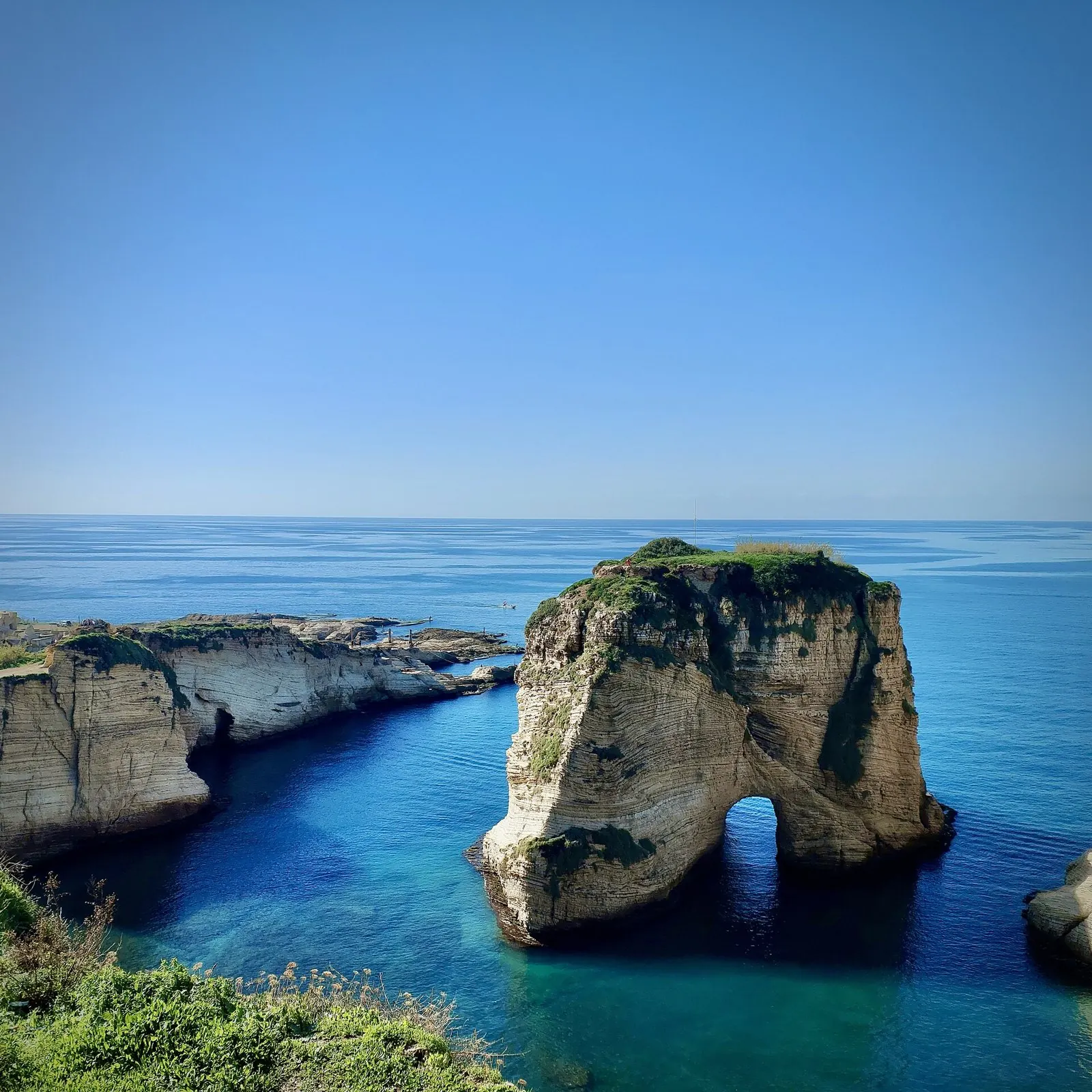
The Pigeon Rocks at Raouché, a short walk from the gallery · CC BY-SA 4.0
Gallery · Raouché
Galerie Janine Rubeiz
Named after Janine Rubeiz, who founded the cultural centre Dar el Fan in 1967; her daughter Nadine Begdache turned it into a gallery in the early 1990s. Lebanese modern and contemporary art, by the sea.
Look for: The painters of the Lebanese modern generation, then a walk to the Pigeon Rocks.
Free
Phoenician anthropoid sarcophagi. National Museum of Beirut · CC BY-SA 2.0
Museum · Museum Street
National Museum of Beirut
Lebanon's archaeological collection, from the Phoenicians to the Mamluks. During the civil war, the staff encased the large pieces in concrete to protect them; a short film shows the rescue.
Look for: The 3rd-century Roman mosaic with a bullet hole from a sniper position.
Closed Mondays
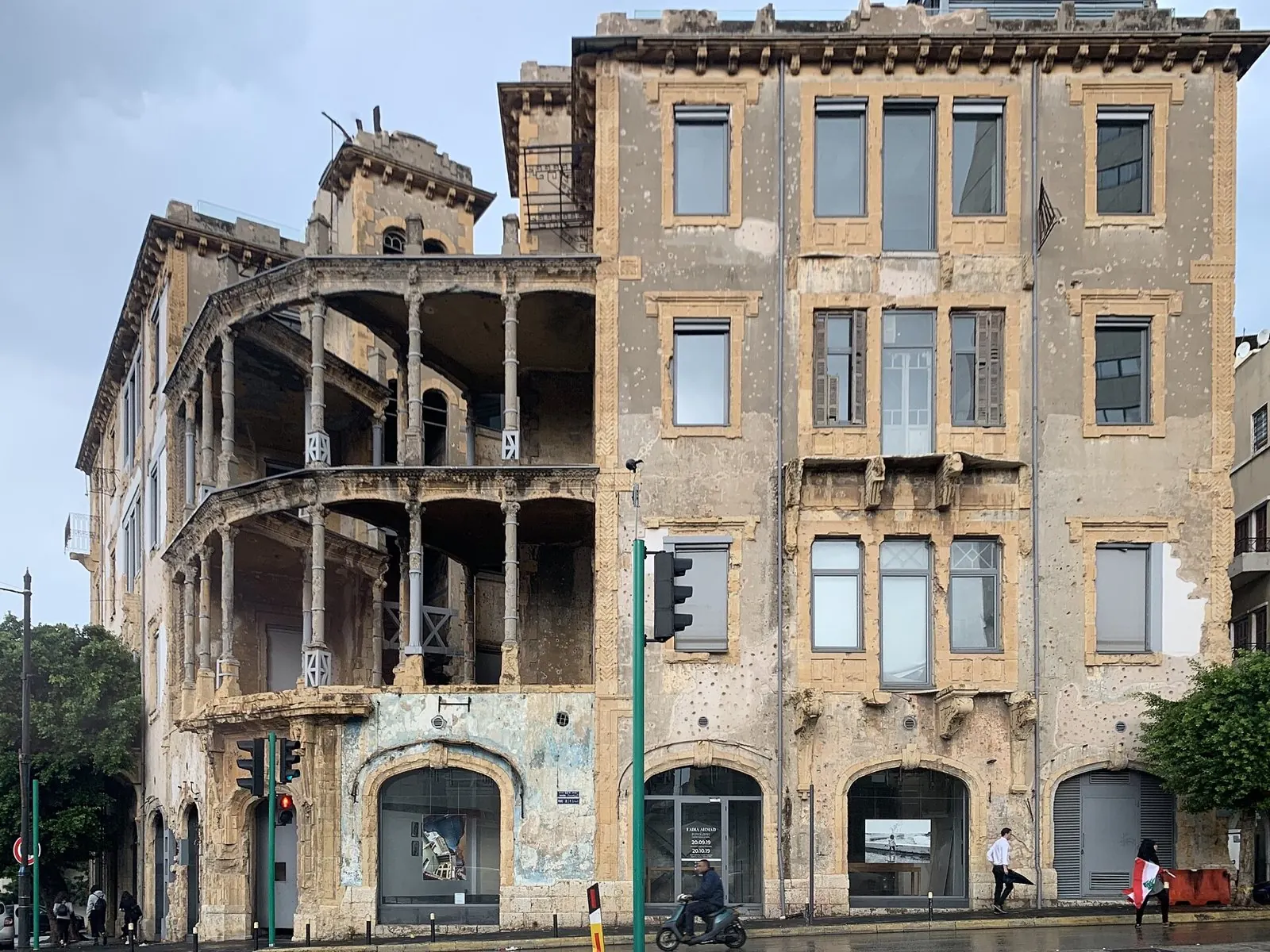
Beit Beirut, Beirut · CC BY-SA 4.0
Memorial museum · Sodeco
Beit Beirut
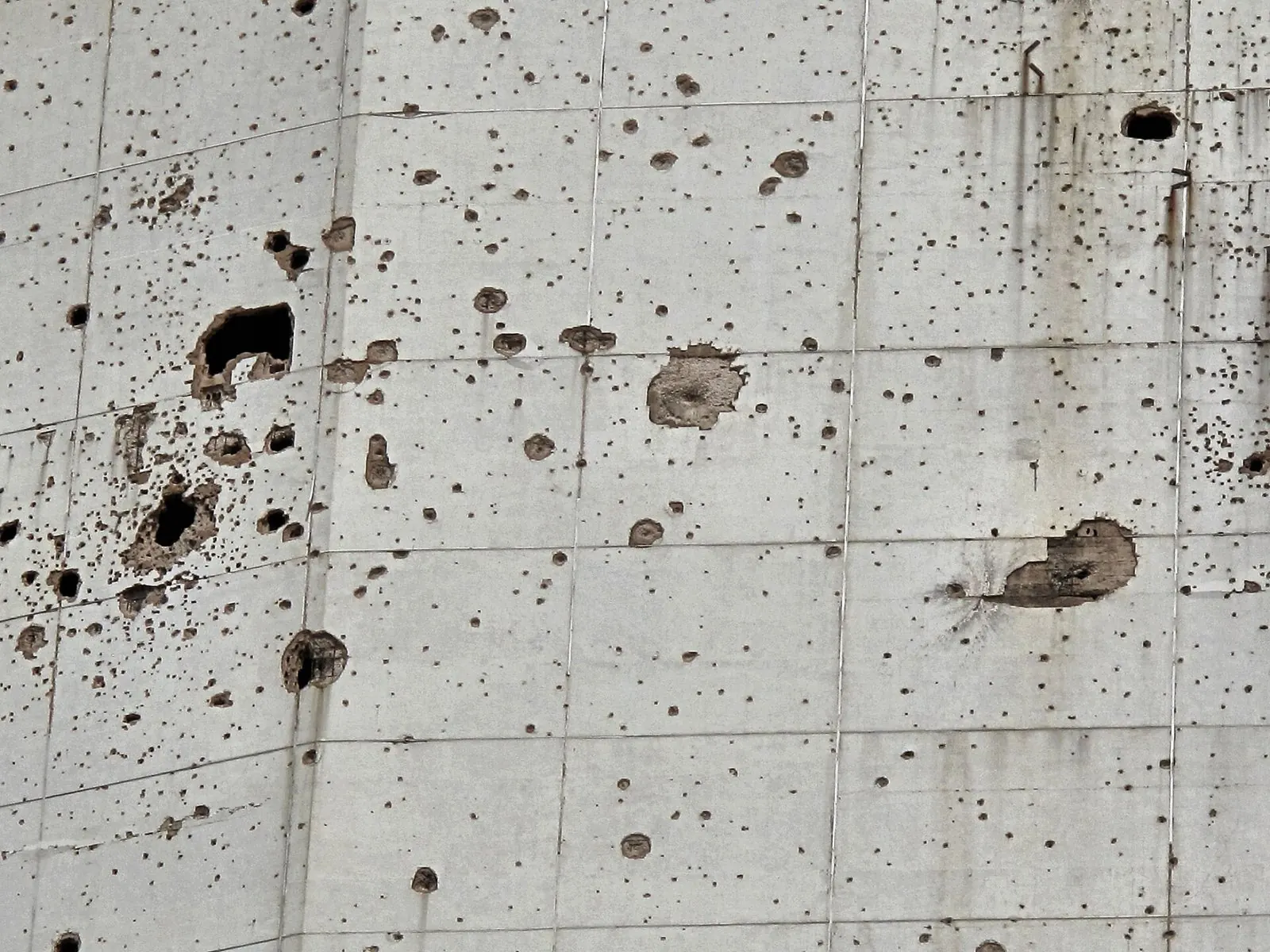
The Barakat building, a 1920s yellow villa on the old Green Line, used by snipers during the civil war and kept with its scars as a museum of memory.
Look for: The sandbagged sniper positions behind the windows.
Opening hours vary · check first
Gallery · Clemenceau
Saleh Barakat Gallery
One of the gallerists who built the Lebanese modern and contemporary market, in a former cinema.
Look for: The big main room: shows of the modern masters and the new generation.
Free
Art centre · Jisr el Wati
Beirut Art Center
A non-profit space for contemporary art founded in 2009, since 2019 in the SAFE storage building in the industrial district by the Beirut River. Exhibitions, performances, screenings and workshops, with artists from Lebanon and the region at the centre.
Look for: The performances and screenings, as strong as the shows.
Free · check opening days
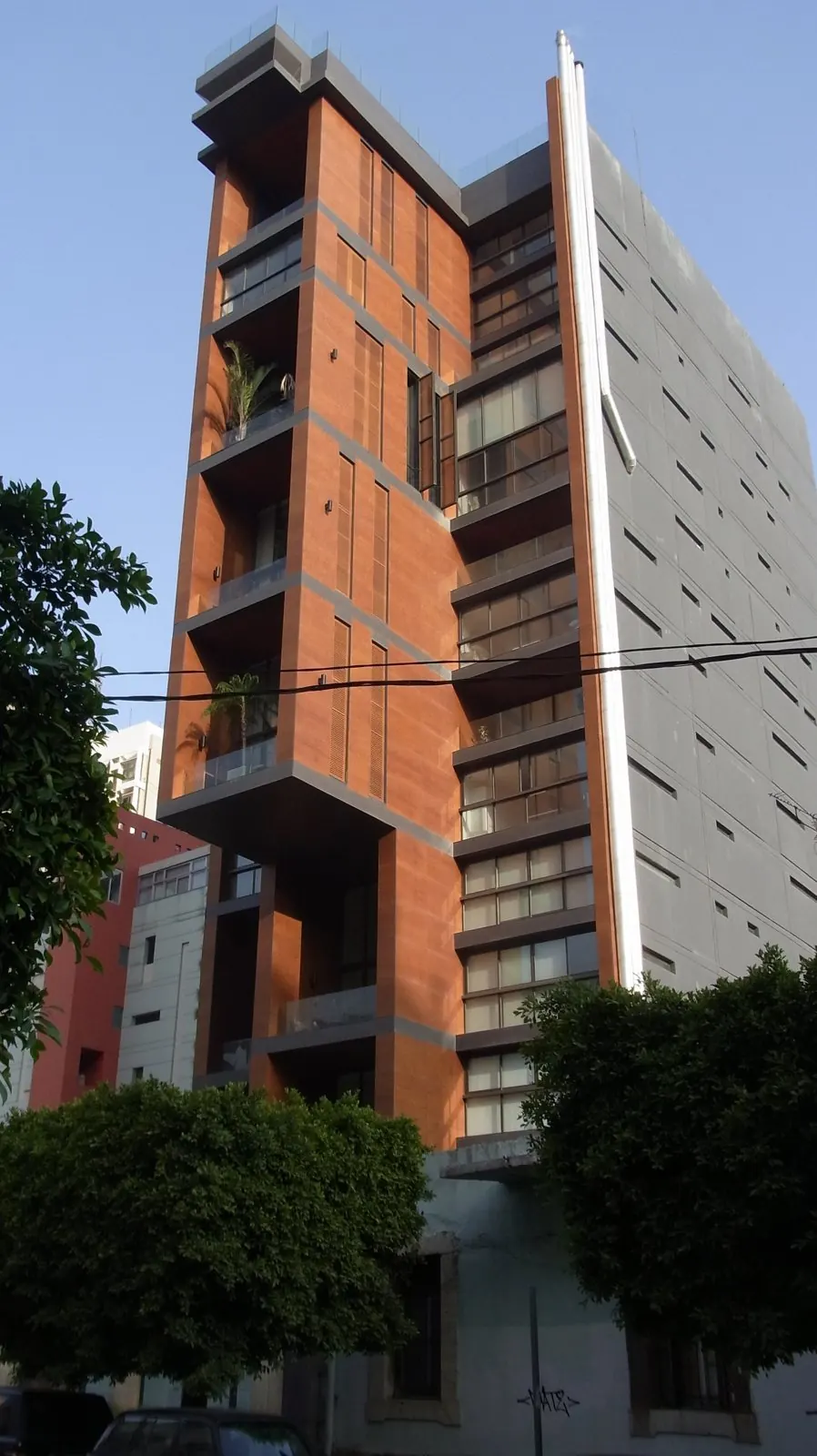
Jean-Marc Bonfils's East Village building, Mar Mikhael, home of Galerie Tanit · CC BY-SA 3.0
Gallery · Mar Mikhael
Galerie Tanit
The Beirut branch (2007) of a Munich gallery founded in 1972 by Naila Kettaneh Kunigk. Its building, by the architect Jean-Marc Bonfils, was wrecked in the 2020 port explosion, which killed him; the gallery reopened in 2021.
Look for: Young Lebanese artists shown alongside the international programme.
Free · closed Sundays
Off the list
Off-Piste in Beirut
Rooms, ruins and curiosities: the city's other museum.
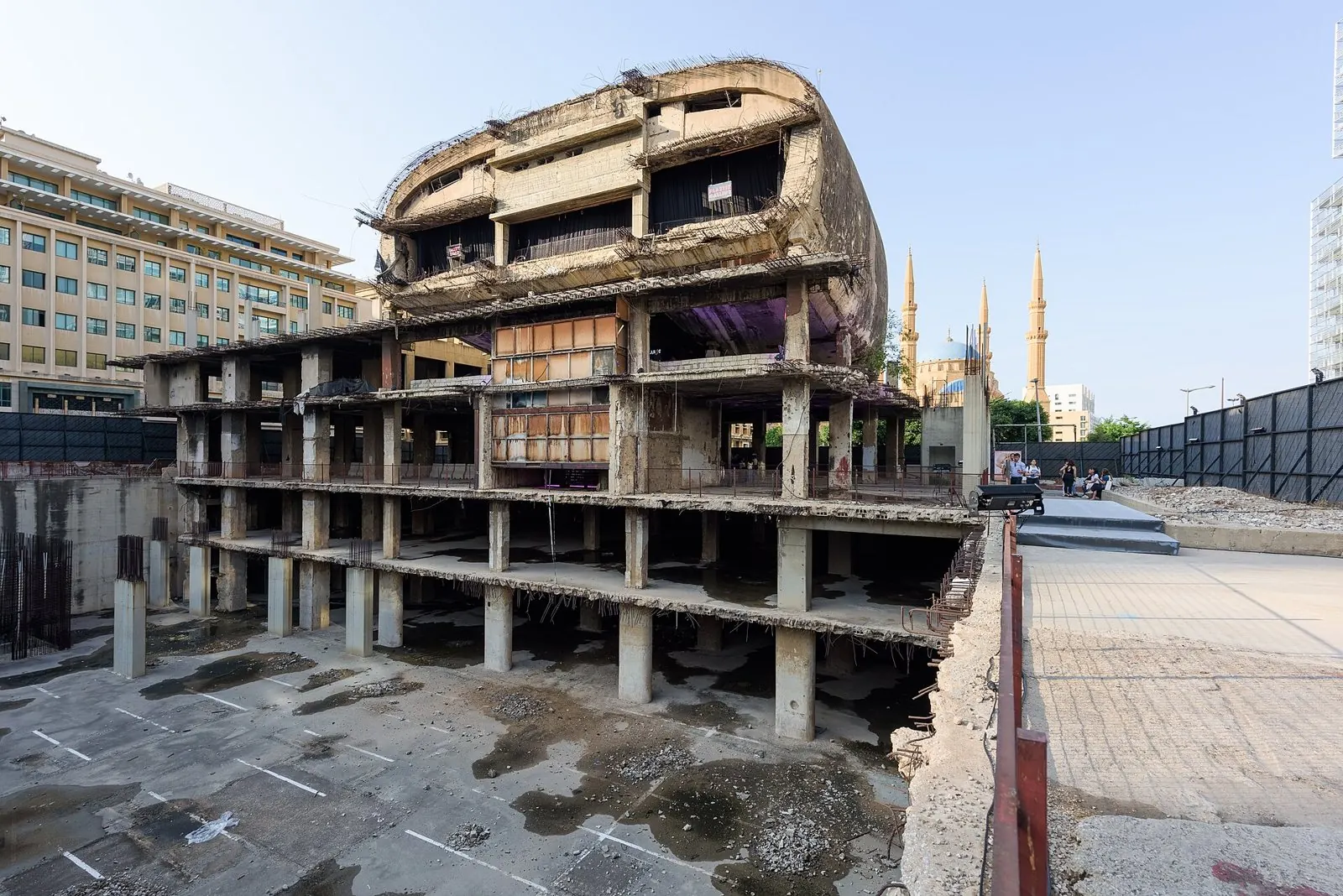
The Egg, Beirut · CC BY-SA 4.0
Ruin · Downtown
The Egg
The concrete shell of an unfinished 1960s cinema, the Dome City Center, by Joseph Philippe Karam. A survivor of the civil war, and a symbol argued over ever since.
Walk around it; don't go inside.
The Holiday Inn, Beirut · CC BY 2.0
Ruin · Minet el Hosn
The Holiday Inn
A hotel that opened in 1974 and became a front line in 1975. It still stands, gutted, facing the Phoenicia.
Look from the Corniche.
St George Greek Orthodox Cathedral, Beirut · CC BY-SA 3.0
Church · Nejmeh Square
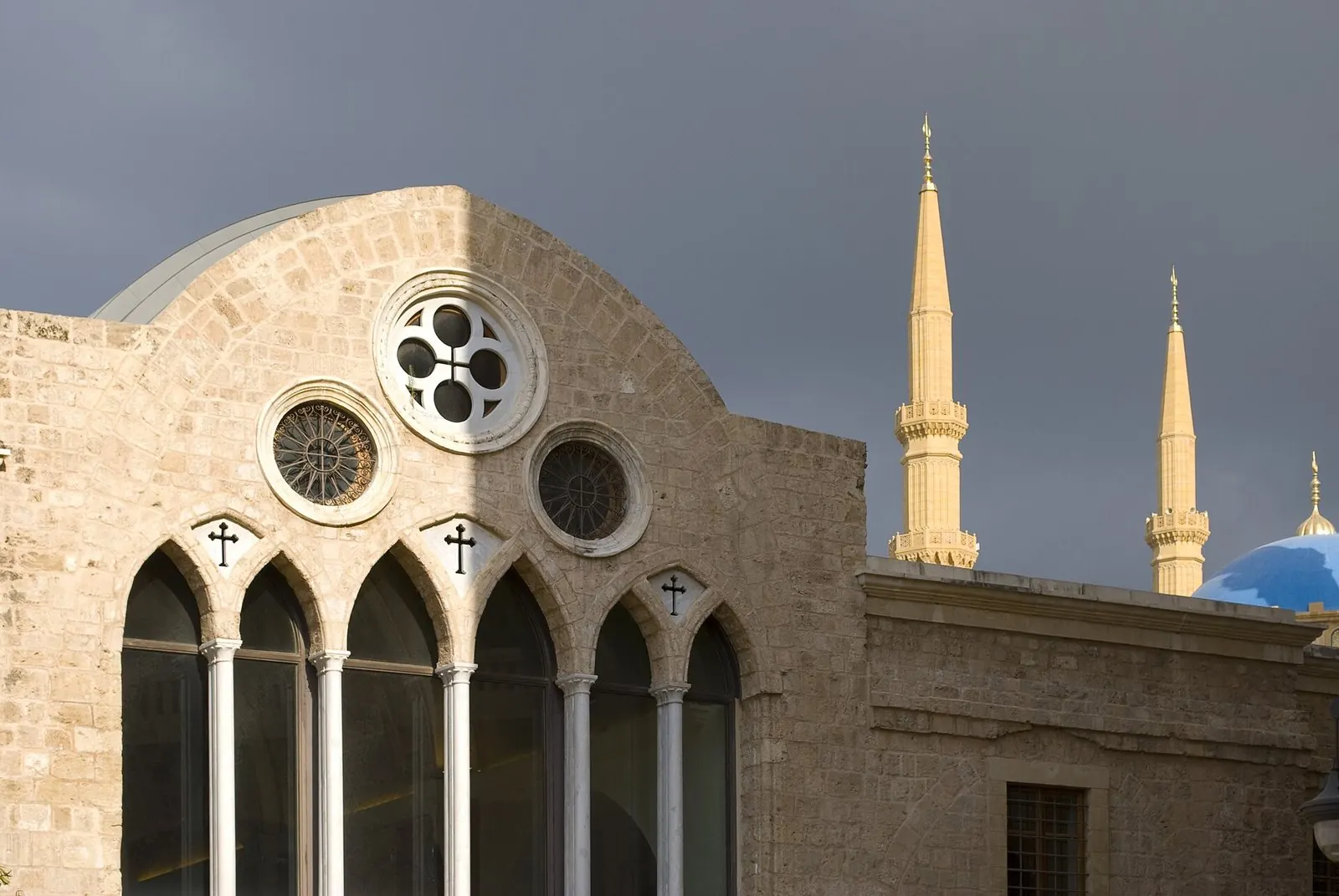
St George Greek Orthodox Cathedral
Beirut's oldest church, with a crypt museum showing the layers of the city beneath it: Hellenistic, Roman, Byzantine.
The crypt.
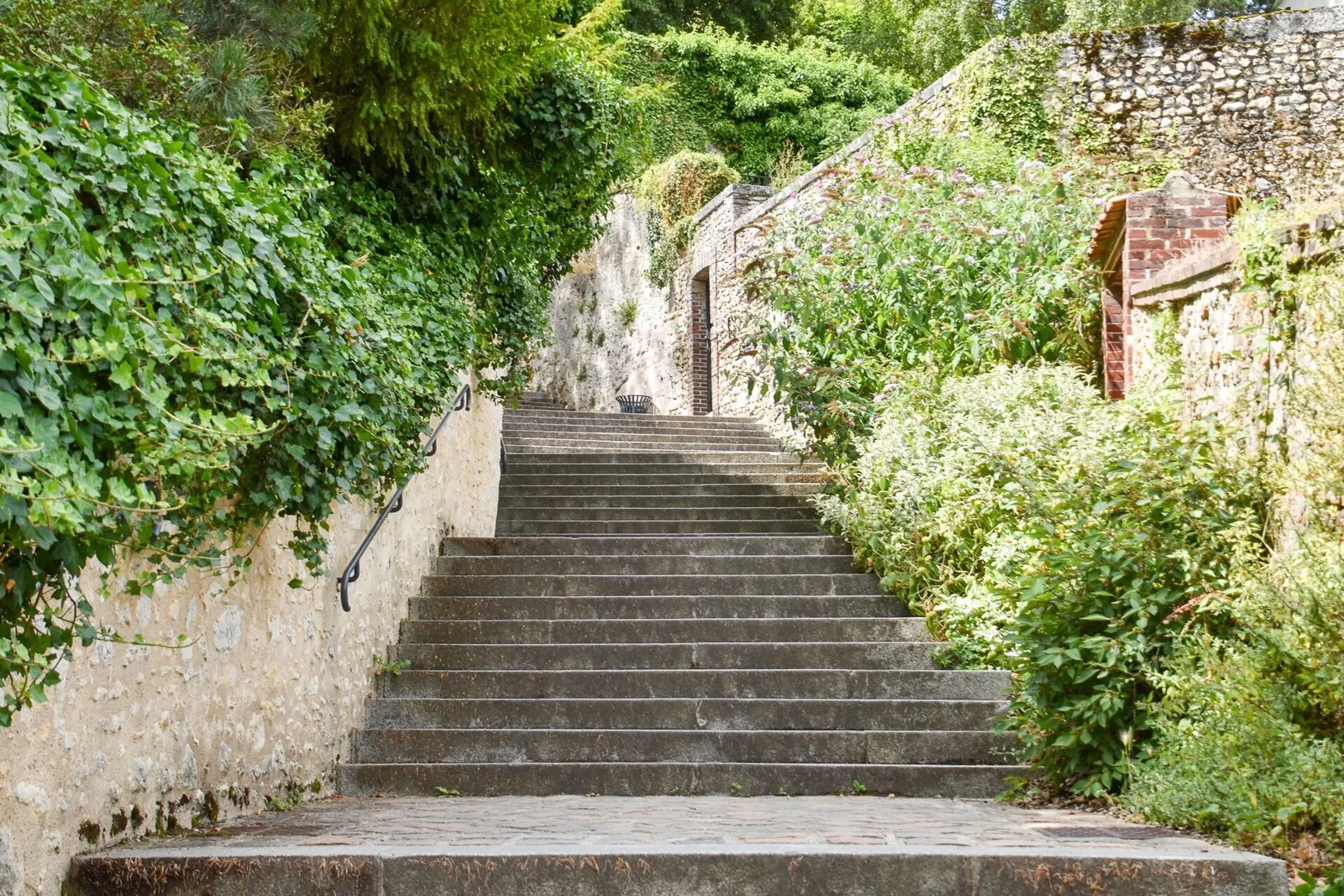
Mar Mikhael stairs, Beirut · CC BY-SA 4.0
Neighbourhood · Gemmayzeh
Mar Mikhael stairs
The Saint-Nicolas and Vendôme staircases between Achrafieh and Gemmayzeh, with old houses, plants and the art of the neighbourhood.
Climb the Saint-Nicolas stairs at sunset.
Artist foundation · Ras el Matn, under an hour from Beirut
Saloua Raouda Choucair Foundation
Saloua Raouda Choucair (1916–2017), the pioneer of Arab abstraction, made modular sculptures whose parts fit together like the verses of an Arabic poem. Her foundation opened on her birthday in June 2024, in the pine forests of the Metn, in a building by Karim Bekdache Studio: storage and exhibition space at once, with more than 500 works and her archives.
Visits by appointment; check before you go.
Ruin · Kantari
Burj el Murr
A 34-storey concrete tower begun in 1974 as the city's tallest office block. It never opened: the civil war turned it into a sniper post, and it has stood empty ever since, one of the most charged buildings in the city.
Look from the Corniche; it is not open.
Collection · Achrafieh
Villa Audi Mosaic Museum
A 19th-century villa on the Sursock street hill, holding the Audi family's collection of Roman and Byzantine floor mosaics, laid out room by room.
Check opening days before you go.
Nearby
Tripoli
Oscar Niemeyer's unfinished Rachid Karami International Fair, a UNESCO World Heritage site since 2023, about 90 minutes north.
Bsharri
The Gibran Museum, in the monastery where Khalil Gibran is buried, above the Qadisha Valley.
Beiteddine
A 19th-century emir's palace, with Byzantine mosaics in its stables.
If you have one day
Sursock Museum at opening → down the Saint-Nicolas stairs to Gemmayzeh → lunch → the National Museum → Beit Beirut → sunset on the Corniche.